


Shock Absorbing Motorcycle Phone Mount: Stability, Protection, and Real Riding Performance
A shock absorbing motorcycle phone mount has a harder job than an ordinary Bicycle Holder. Motorcycle riders deal with engine vibration, road impact, higher speed, longer travel distance, gloves, weather exposure, and navigation use that may last for hours. If the mount shakes, loosens, blocks the screen, or transfers too much vibration to the phone, the product becomes a safety and after-sales problem.
For wholesalers and brand owners, this product category requires a more technical buying standard. The mount must hold the phone firmly, reduce vibration, protect the device surface, fit common handlebar setups, and remain convenient for daily use. A supplier working in bike phone holders and motorcycle mounting accessories should be evaluated not only by appearance but by structure, testing, and production consistency.

Understand What Shock Absorption Really Means
Shock absorption is often used as a selling point, but buyers should define what kind of vibration the product is designed to manage. Engine vibration, rough road impact, sudden braking, and handlebar resonance are not the same. A mount may reduce small vibration but still struggle with heavy impact or loose handlebar installation.
Vibration Control Is a System
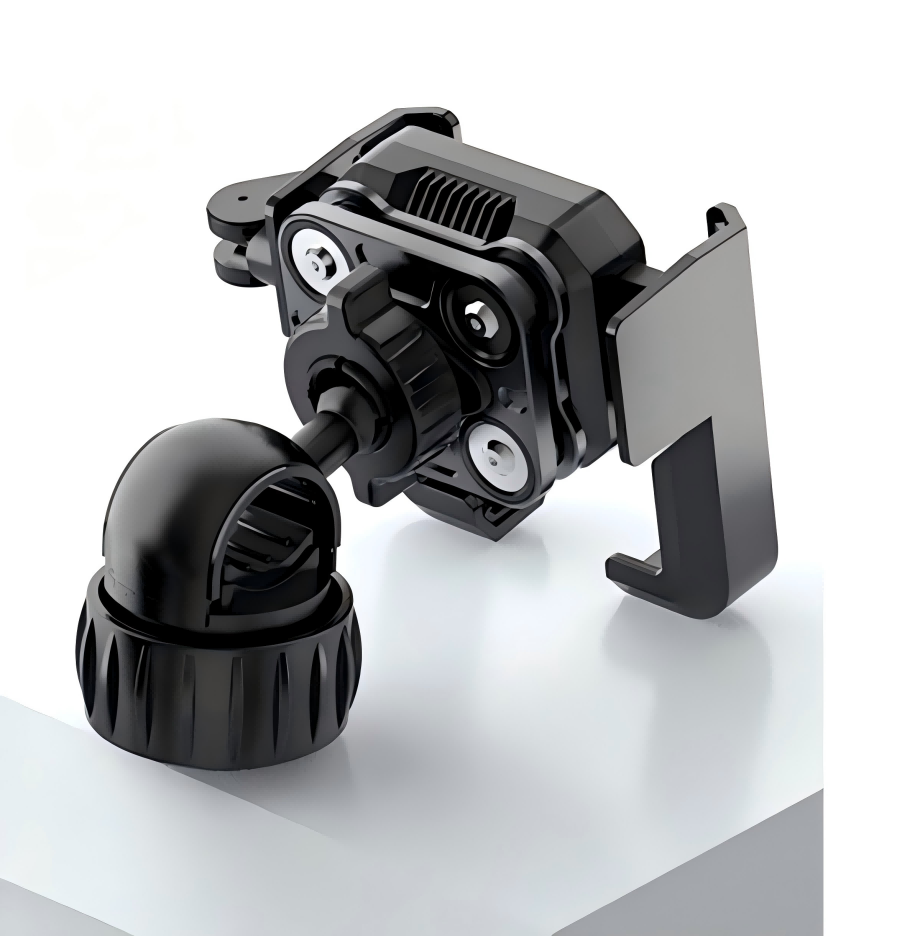
The phone holder, clamp, joint, rubber pad, screw tension, and contact surface all influence vibration. If one part is weak, the whole structure can move. Buyers should look for a system that controls the handlebar connection and the phone connection at the same time.
Look at the Handlebar Clamp First
The clamp is the foundation of a motorcycle phone mount. If the handlebar connection slips, no locking arm or shock pad can solve the problem. Buyers should confirm compatible handlebar diameters, insert pad options, screw quality, tightening feel, and whether the clamp can maintain pressure after repeated riding.
A Good Clamp Should Feel Confident
When the sample is installed, the clamp should tighten smoothly without forcing the user to overtighten. It should not rotate easily by hand after installation. If adapter pads are required, they should fit cleanly and not slide during tightening.

Evaluate the Phone Locking Mechanism
Motorcycle riders often use phones for navigation, delivery apps, communication, and trip tracking. The phone must stay in place even when the road becomes rough. A locking mechanism should control the phone from multiple directions while still allowing quick release when the ride ends.
Wholesale buyers should test different phone sizes, thick cases, and common camera bump layouts. They should also check whether the holder presses side buttons or blocks charging cables. A strong lock that creates usability problems will still disappoint customers.
Check the Anti-Vibration Contact Points
Shock absorbing performance often comes from rubber, silicone, elastic pads, dampening joints, or floating structures. The material should reduce vibration without allowing the phone to bounce visibly. If the pad is too soft, the phone may move. If it is too hard, the product may not reduce vibration enough.
Protection Should Not Hide Weak Structure
Soft pads are helpful, but they cannot replace a secure mechanical design. Buyers should check whether the phone is stable before and after the pads compress. The best design uses protection material to support a strong structure, not to cover up loose movement.

Make Sure Rotation Does Not Create Looseness
Riders often need portrait and landscape viewing for maps, camera recording, or dashboard-style use. Rotation is useful, but it introduces another joint that can loosen. The rotation mechanism should move when adjusted and then stay fixed during the ride.
A sample should be rotated many times before evaluation. After repeated movement, the buyer should check whether the joint feels loose, makes noise, or changes angle under hand pressure. This small test often reveals whether the mount can handle real use.
Consider Weather and Outdoor Exposure
Motorcycle accessories face sun, heat, dust, light rain, and temperature changes. Even if the mount is not an electronic product, its material can age, fade, harden, or deform. Screws and metal parts should resist rust, and plastic parts should remain stable during outdoor use.
Outdoor Durability Affects Brand Reputation
Customers may not complain on the first day. Problems often appear after weeks of use. A wholesale buyer should ask about material grade, surface treatment, metal hardware, and whether the product has been checked for daily outdoor use.
Test With the Rider's Hands in Mind
Motorcycle riders may wear gloves, stop briefly, or adjust the phone at traffic lights. The mount should not require delicate hand movement. Release buttons, knobs, and tightening parts should be large enough and positioned naturally.
- Can the phone be inserted and removed without confusing steps?
- Can the angle be adjusted without loosening the handlebar clamp?
- Can the mount be tightened firmly without damaging the handlebar?
- Can the screen remain visible without blocking key controls?
Review Packaging for a Technical Product
A shock absorbing motorcycle phone mount needs packaging that explains more than appearance. Buyers should include compatibility details, installation steps, accessory list, safety notes, and product features. If the mount is sold online, clear images and feature descriptions can reduce wrong purchases.
Packaging should also protect the structure during shipment. Moving parts, screws, and pads must not rub against the product surface. Missing adapter pads or screws can turn a good product into a customer complaint.
Use a Practical Test Matrix Before Approval
A test matrix helps buyers compare samples without relying on memory. It also helps the supplier understand the expected standard before mass production. The goal is not to make the process complicated; it is to make the final decision measurable.
| Test Area | Sample Check | Approval Standard |
| Clamp fit | Install on minimum and maximum handlebar sizes | No slipping after tightening by hand. |
| Phone stability | Use small, large, and thick-case phones | No side slip, bounce, or button pressing. |
| Rotation joint | Rotate repeatedly and apply hand pressure | Angle stays fixed after adjustment. |
| Pad performance | Check compression and surface protection | Pads protect phone without excessive movement. |
| Packaging | Shake box and review accessory placement | Parts stay complete and easy to identify. |

Choose Suppliers That Can Explain the Structure
A reliable supplier should be able to explain why a mount is suitable for motorcycle use, which parts control vibration, what handlebar sizes are supported, how the phone is locked, and what can be customized. If the answer is only that the product looks strong, the buyer should keep asking.
Engineering Communication Reduces Order Risk
A supplier with experience in phone holder and vehicle-accessory products gives buyers a useful starting point, but the final decision should still be based on sample testing, clear specifications, packaging confirmation, and inspection standards. Good communication turns a product idea into a repeatable order.
Conclusion
A shock absorbing motorcycle phone mount should be judged by riding performance, not only by product photos. Buyers need to check clamp strength, locking method, anti-vibration materials, rotation stability, weather resistance, user operation, packaging, and supplier communication. When these details are confirmed before production, the product is more likely to protect the phone, satisfy riders, and support repeat wholesale orders.
FAQ
What makes a motorcycle phone mount shock absorbing?
Shock absorbing performance usually comes from a combination of stable structure, secure clamp, dampening pads, controlled contact points, and joints that reduce vibration without allowing the phone to bounce.
Is a bicycle phone holder suitable for motorcycles?
Not always. Motorcycle use creates stronger vibration and higher riding forces, so buyers should choose a mount designed and tested for motorcycle conditions when that is the target market.
What should buyers test before ordering in bulk?
They should test handlebar fit, phone stability, rotation strength, pad protection, installation convenience, packaging completeness, and performance with real phones and phone cases.
Can motorcycle phone mounts be customized for wholesale orders?
Yes. Depending on the supplier and model, buyers may customize logo, color, packaging, labels, accessory configuration, and sometimes structure or tooling for larger projects.